Maurilio Lovatti
The Martyrdom of Saint Eleutherius by Giacomo Zoboli
(1738)
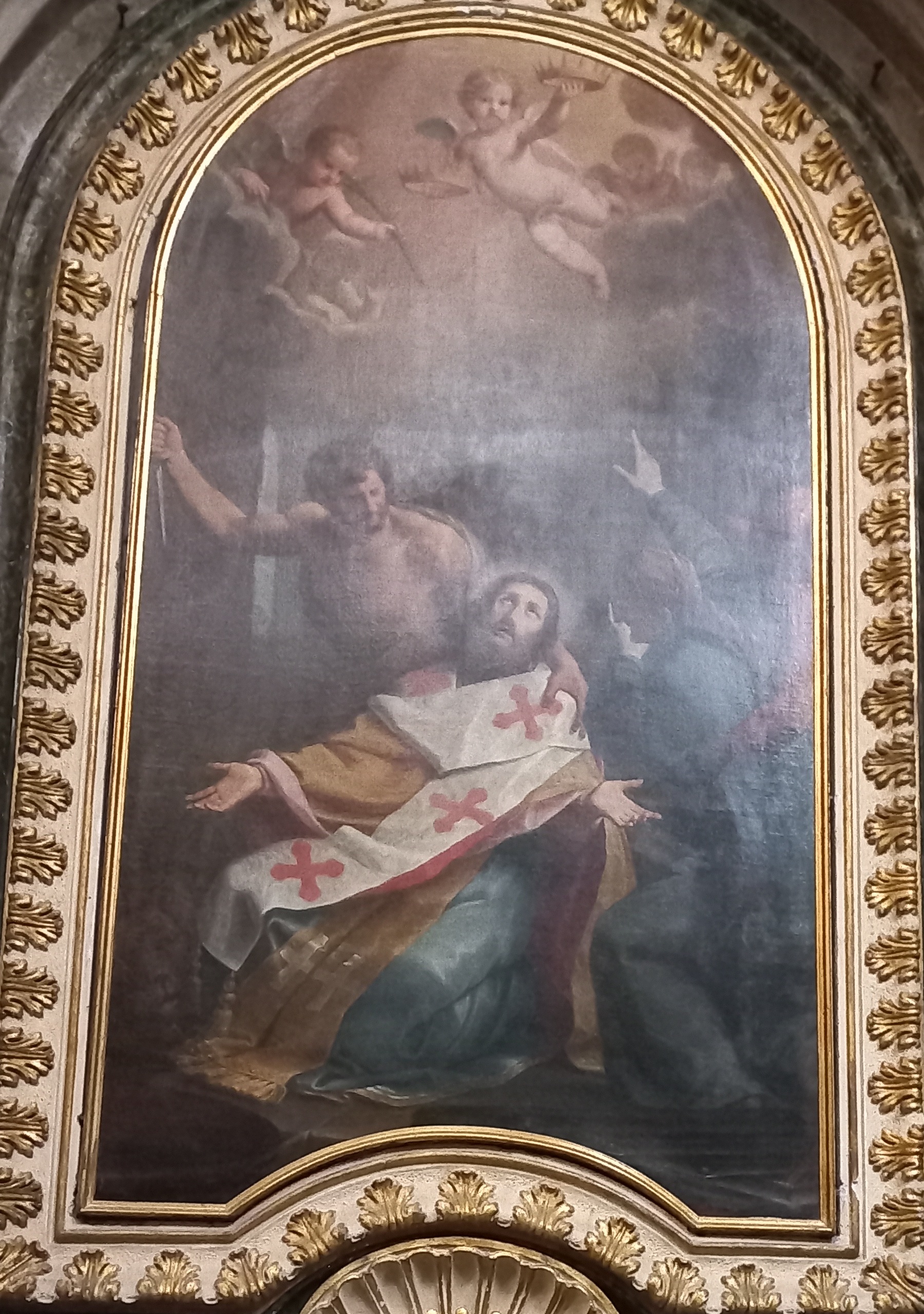
The painting, which is dated and signed, is preserved at the first side altar on the right in the church of San Giovanni della Pigna, in the Roman district of the same name.
The small church dates back to the tenth century and was originally dedicated to the martyrs Eleutherius and Genesius, whose bodily remains are preserved beneath the high altar (M. Armellini, Le chiese di Roma dal secolo XIV al secolo XIX, Tipografia Vaticana, Rome, 1891, p. 468). After falling into disrepair, the church was granted in 1584 by Pope Gregory XIII to the Archconfraternity of Charity towards Prisoners (Arciconfraternita della Pietà verso i carcerati), which rebuilt it from the ground up. The architect Torroni was entrusted with the construction of the new church, which was completed in 1624 under the dedication Sancti Ioannis de Pinea.
The painting was executed by Giacomo Zoboli (Modena, 1681 – Rome, 1767) in 1738, a pivotal year in the painter’s life, as he moved his residence and workshop to Palazzo Farnese, then owned by the Bourbons of Naples. This privilege had been granted to him by the King of Naples, Charles of Bourbon, at the request of Cardinal Neri Maria Corsini (1685–1770), nephew of Pope Clement XII. Zoboli had begun to establish his reputation in 1729, when he painted Saint Jerome Listening to the Trumpet of the Last Judgment in the Roman basilica of Sant’Eustachio, a work that was highly acclaimed by his contemporaries. The numerous commissions received by the Modenese painter in Rome between 1727 and 1740 were due primarily to Cardinal Neri Corsini himself.
The martyr depicted in the painting is Saint Eleutherius, Bishop, identified with Eleutherius, who was born in Rome in the first century and martyred there, together with his mother Anthia, during the persecution under Emperor Hadrian, between 117 and 120. According to Greek sources dating from the fifth and sixth centuries (BHG, I, pp. 173–74, nos. 568–71b), the saint was bishop in Illyricum, whereas other Latin sources identify him as a bishop in Apulia (BHL, I, p. 368, no. 2452). This is the most widely accepted identification, also adopted by Maria Barbara Guerrieri Borsoi, Disegni di Giacomo Zoboli, De Luca, Rome, 1984, p. 33.
However, the cult of Saint Eleutherius of Arce, who was born in England and died in the fifth Century, was also widespread in Rome. According to tradition, he had made a pilgrimage to the Holy Land and, on his return journey, died at Arce, in the province of Frosinone. There, an innkeeper refused him hospitality and set his dogs upon him; the animals, however, immediately became docile at the sight of the saint. The following morning, the dead pilgrim’s body was found not far from the inn, guarded by the mastiffs. The local population immediately acclaimed him a saint and made him the town’s patron. His relics are still preserved in an urn beneath the altar dedicated to him in the parish church of Saints Peter and Paul in Arce. The identification with Pope Saint Eleutherius, the thirteenth pope, who lived towards the end of the second Century, must instead be ruled out, since there is no evidence that he was martyred.
At least six drawings by Zoboli testify to the painstaking preparatory work undertaken by the Modenese painter (M. B. Guerrieri Borsoi, Disegni di Giacomo Zoboli, pp. 33–34 and 88–89).
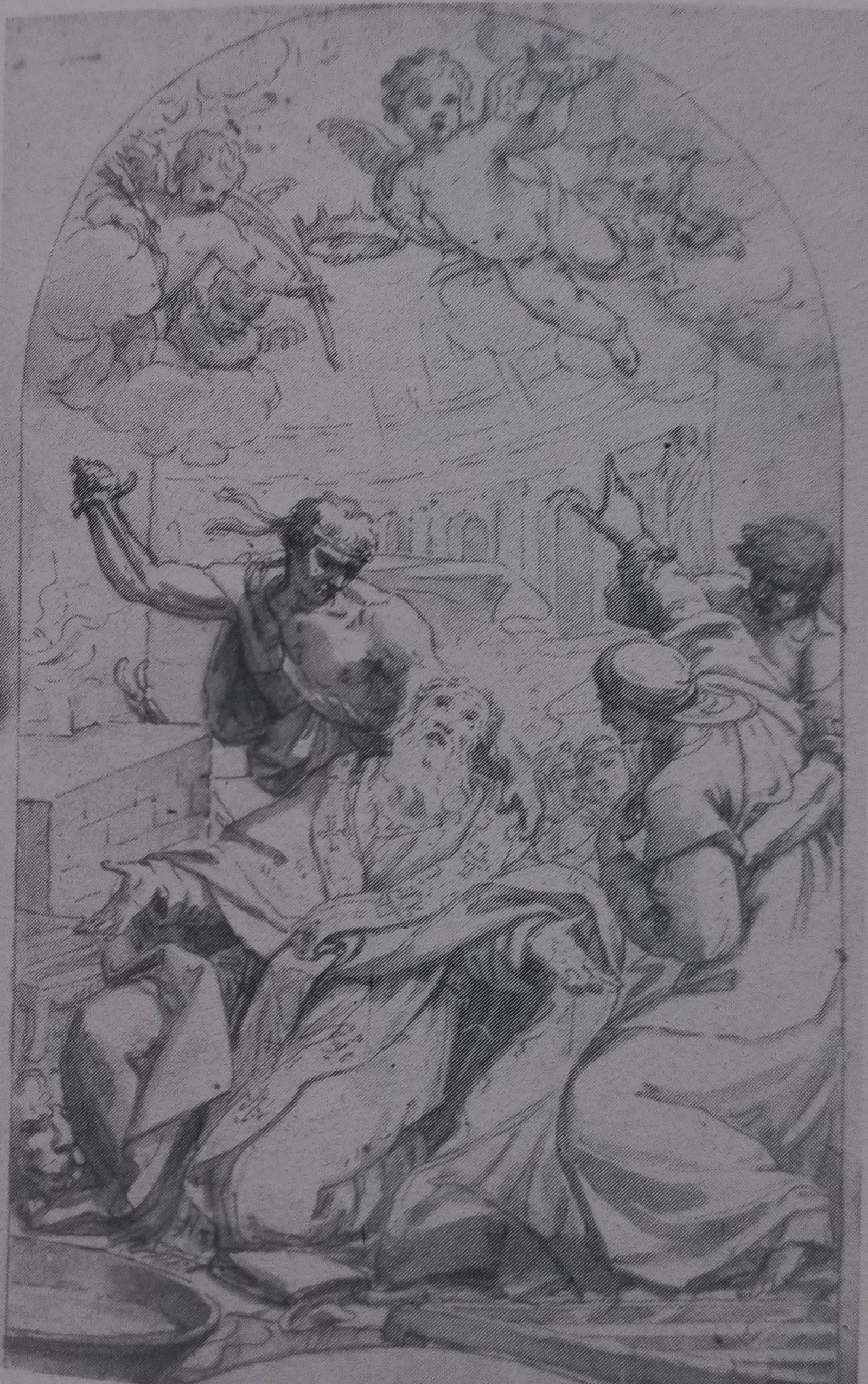
Final drawing for the painting of the martyrdom of Saint Eleutherius (taken from M. B. Guerrieri Borsoi, Disegni di Giacomo Zoboli, p. 89, drawing no. 54).
It is highly likely that Zoboli also drew inspiration from the Martyrdom of
Saint Frederick (1651) by Giacinto Brandi, which was housed at the
time in the fourth chapel on the right, dedicated to Saint Frederick of Utrecht,
within the Basilica of Santa Maria in Trastevere in Rome (today, Brandi’s
painting is located in the church’s parish offices).

Autoritratto di Giacomo Zoboli (Museo civico di Modena)
Dipinti di Giacomo Zoboli a Roma, Modena, Brescia ed altre ubicazioni (in italian)
Death and burial of the painter Giacomo (Jacopo) Zoboli
Giacomo Zoboli and Cardinal Querini: Rome and Brescia in XVIII Century
- Giacomo Zoboli (1681-1767) in Treccani - Dizionario biografico degli italiani (in italian)
- Giacomo Zoboli (1681-1767) (Wikipedia)